2012 Chevrolet Malibu Owners Manual: A Comprehensive Plan
Welcome to the definitive guide for your 2012 Chevrolet Malibu! This manual details everything needed for safe‚ enjoyable‚ and informed vehicle operation and upkeep.

Congratulations on choosing the 2012 Chevrolet Malibu! This vehicle represents a blend of style‚ comfort‚ and efficiency‚ designed to enhance your driving experience. This owner’s manual serves as a vital resource‚ providing comprehensive information about your Malibu’s features‚ operation‚ and maintenance.
Before you begin your journey‚ we strongly encourage you to thoroughly read this manual. Understanding your vehicle’s capabilities and limitations is crucial for safe and responsible driving. Familiarize yourself with the location of important controls‚ safety systems‚ and warning indicators.
This manual is organized to provide easy access to the information you need. We’ve included detailed explanations‚ helpful illustrations‚ and practical tips to ensure you get the most out of your 2012 Malibu. Keep this manual readily available in your vehicle for future reference.
Vehicle Identification & Key Information
Your 2012 Chevrolet Malibu possesses unique identifiers crucial for service‚ warranty claims‚ and theft recovery. This section details locating and understanding these key pieces of information. Primarily‚ we’ll focus on the Vehicle Identification Number (VIN)‚ a 17-digit code acting as your vehicle’s fingerprint.
The VIN provides essential details about your Malibu’s manufacturing specifications. Additionally‚ understanding your vehicle’s model and trim level is important for ordering the correct parts and accessories. This information is found on your vehicle’s registration and insurance documents.
Properly recording this information in a safe place is highly recommended. Knowing your key fob’s features and operation will also enhance your ownership experience‚ which will be covered in the following section.
2.1 Vehicle Identification Number (VIN) Location
Locating your 2012 Chevrolet Malibu’s Vehicle Identification Number (VIN) is straightforward. You’ll find it in several places for easy access. The primary location is on the driver’s side dashboard‚ visible through the windshield. Look for a rectangular label affixed to the dashboard; the VIN is clearly printed on this label.
Additionally‚ the VIN is stamped on the driver’s side doorjamb‚ on the sticker containing tire information and safety notices. It’s also present on your vehicle’s registration card and proof of insurance. For verification purposes‚ the VIN is also etched onto the vehicle’s frame‚ though this requires professional access.
Always reference the VIN when requesting service or ordering parts to ensure accuracy. Keeping a personal record of your VIN is highly recommended.
2.2 Key Fob Operation & Features
Your 2012 Chevrolet Malibu’s key fob offers convenient control of several vehicle functions. The ‘Unlock’ button dislocks the doors‚ while ‘Lock’ secures them. Pressing ‘Panic’ activates the alarm and flashing lights for emergency situations. The ‘Trunk Release’ button‚ if equipped‚ remotely opens the trunk.
To remotely start the engine (on equipped models)‚ press and hold the ‘Remote Start’ button. The key fob also features integrated controls for the available remote start system. Battery replacement is simple; refer to the separate battery replacement guide.
Be mindful of the fob’s range and obstructions. Avoid prolonged pressing of buttons to conserve battery life. If the fob malfunctions‚ use the physical key to access and operate your Malibu.
Safety Features & Systems
Your 2012 Chevrolet Malibu is equipped with a suite of safety features designed to protect you and your passengers. These systems work together to help prevent accidents and minimize injury in the event of a collision. Standard features include a comprehensive airbag system‚ strategically placed throughout the cabin.
The Anti-lock Braking System (ABS) helps maintain steering control during hard braking. Additionally‚ the Malibu incorporates stability control and traction control systems to enhance handling in various conditions. Always wear seatbelts – they are the primary safety device in any vehicle.
Familiarize yourself with the operation of all safety systems detailed in this manual. Proper understanding and use are crucial for maximizing their effectiveness.
3.1 Airbag System – Understanding & Precautions
The 2012 Chevrolet Malibu’s airbag system is a crucial component of its safety features‚ designed to supplement seatbelt use. Airbags deploy rapidly during moderate to severe collisions‚ providing a cushion to help reduce the risk of injury. The system includes frontal‚ side-impact‚ and curtain airbags.
Important Precautions: Never place rear-facing child seats in the front passenger seat if an active airbag cannot be deactivated. Always ensure passengers are properly seated and restrained. Airbag deployment can cause injury if occupants are too close.
Regularly inspect airbags for any signs of damage. Do not attempt to repair or modify the airbag system yourself; servicing should only be performed by qualified technicians.
3.2 Anti-lock Braking System (ABS)
Your 2012 Chevrolet Malibu is equipped with an Anti-lock Braking System (ABS) designed to help maintain steering control during hard braking situations and reduce stopping distances. ABS prevents wheel lockup‚ allowing you to steer around obstacles while braking. You may feel a pulsing sensation in the brake pedal when ABS activates – this is normal and indicates the system is functioning correctly.
Important Considerations: ABS does not eliminate the need for careful driving. Maintain a safe following distance and adjust your speed for road conditions. When braking hard‚ apply firm and continuous pressure to the brake pedal; do not pump the brakes.
The ABS warning light on the instrument panel will illuminate if a system malfunction is detected. If this occurs‚ have the system inspected by a qualified technician immediately.
Understanding Your Instrument Panel
The instrument panel provides crucial information about your 2012 Chevrolet Malibu’s operation and status. Familiarizing yourself with its various gauges‚ indicators‚ and warning lights is essential for safe and informed driving. The primary gauges include the speedometer‚ tachometer‚ fuel level gauge‚ and engine temperature gauge. These provide real-time data regarding vehicle speed‚ engine RPM‚ remaining fuel‚ and engine operating temperature.
Additional indicators display information about systems like the charging system‚ oil pressure‚ and safety features. Warning lights illuminate to alert you to potential issues requiring attention. Refer to the following sections for detailed explanations of each gauge‚ indicator‚ and warning light.
Regularly monitoring the instrument panel allows you to proactively address any potential problems and maintain optimal vehicle performance.
4.1 Gauges & Indicators Explained
Let’s delve into the specifics of your 2012 Malibu’s gauges and indicators. The Speedometer displays your vehicle’s speed in miles per hour (MPH) and kilometers per hour (km/h). The Tachometer indicates engine speed in revolutions per minute (RPM). The Fuel Level Gauge shows the approximate amount of fuel remaining in the tank. The Engine Temperature Gauge monitors the engine’s coolant temperature – avoid red zone operation!
Key indicators include the check engine light‚ oil pressure warning‚ battery warning‚ and low fuel indicator. A flashing low fuel light signals critically low fuel levels. The information display may also show average fuel economy‚ outside temperature‚ and other vehicle data. Understanding these displays ensures informed driving.
4.2 Warning Lights & Messages
Your 2012 Malibu utilizes a comprehensive system of warning lights and messages to alert you to potential issues. A solid Check Engine light indicates a problem with the engine or emissions system – schedule a service appointment. The ABS light illuminates if there’s an issue with the anti-lock braking system. A Tire Pressure Monitoring System (TPMS) light signals low tire pressure in one or more tires.

Other important warnings include the brake warning light (parking brake engaged or low brake fluid)‚ the oil pressure warning‚ and the battery warning. Messages displayed in the information center provide more detailed information. Ignoring warning lights can lead to more serious damage; consult a qualified technician promptly for diagnosis and repair.
Operating Your Vehicle
Familiarizing yourself with the operation of your 2012 Malibu is crucial for a safe and enjoyable driving experience. Before starting‚ ensure all passengers are properly secured with seatbelts. The ignition system requires a key to start the engine; insert the key and turn to the ‘Start’ position. Always fully depress the brake pedal when shifting out of ‘Park’;
Steering is responsive‚ offering a comfortable feel for various driving conditions. The automatic transmission smoothly shifts through gears. Pay attention to road conditions and adjust your speed accordingly. Utilize turn signals well in advance of lane changes or turns. Remember to check your mirrors frequently and maintain a safe following distance.
5.1 Starting & Stopping the Engine
To start your 2012 Malibu‚ ensure the gear selector is in ‘Park’ or ‘Neutral’. Depress the brake pedal firmly and turn the ignition key to the ‘Start’ position‚ releasing it once the engine ignites. Avoid prolonged cranking. If the engine doesn’t start‚ wait a few minutes before attempting again.
To stop the engine‚ gently apply the brakes to bring the vehicle to a complete halt. Shift the gear selector to ‘Park’ and firmly engage the parking brake. Turn the ignition key to the ‘Off’ position and remove the key. Never turn off the engine while the vehicle is in motion. Always allow the engine to idle briefly before shutting it off‚ especially after vigorous driving.

5.2 Driving Modes & Fuel Efficiency
Your 2012 Malibu doesn’t feature selectable driving modes‚ but optimizing your driving habits significantly impacts fuel efficiency. Smooth acceleration and consistent speeds are key. Avoid aggressive braking and rapid acceleration‚ as these consume more fuel.

Utilize cruise control on highways for steady-state driving‚ maximizing mileage. Regularly check tire pressure; underinflated tires increase rolling resistance and reduce fuel economy. Minimize idling‚ as it wastes fuel. Consider using the air conditioning sparingly‚ as it places an additional load on the engine. Maintaining a moderate speed‚ generally below 65 mph‚ will also contribute to improved fuel efficiency.
Interior Features & Controls
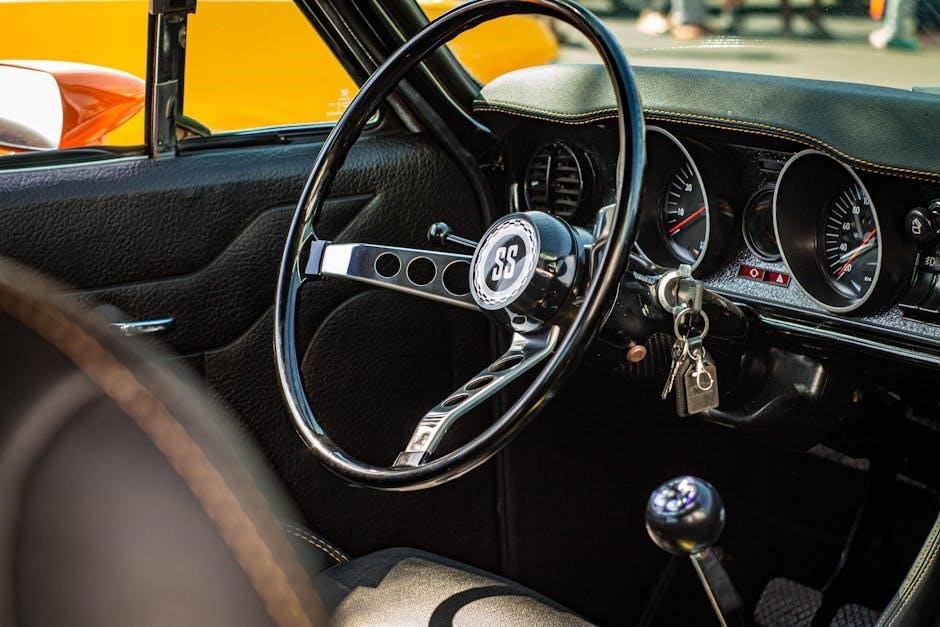
The 2012 Malibu’s interior is designed for comfort and convenience. Familiarize yourself with the location of all controls before driving. The steering wheel houses controls for audio‚ cruise control‚ and phone functions. The center console features the infotainment system‚ climate controls‚ and gear selector.
Adjust the seats for optimal comfort and support. Power windows and door locks are conveniently located on each door panel. Utilize the available storage compartments‚ including the glove box‚ center console‚ and door pockets. Understand the operation of the interior lighting and sun visors. The rear seats offer ample legroom and can be folded down for increased cargo space.
6.1 Climate Control System
Your 2012 Malibu features a sophisticated climate control system designed to maintain a comfortable cabin environment. The system offers both manual and automatic modes. In manual mode‚ you directly control fan speed‚ temperature‚ and airflow direction. Automatic mode intelligently adjusts these settings to maintain your desired temperature.

Controls are located on the center stack. Use the temperature dial to select your preferred setting. The fan speed control adjusts airflow intensity. Select from various airflow modes – panel‚ floor‚ defrost‚ and blend. The recirculation button allows you to recirculate cabin air or draw fresh air from outside. Remember to use the defrost setting to quickly clear windshield fog.
6.2 Audio System & Connectivity
The 2012 Malibu’s audio system provides a range of entertainment options. It includes an AM/FM radio‚ a CD player‚ and auxiliary input for connecting external devices like MP3 players. Higher trim levels may feature a USB port for direct device connection and digital music playback.

System controls are intuitively located on the center stack. Use the power/volume knob to turn the system on/off and adjust the volume. The tune/seek buttons allow you to scan through radio stations. The source button selects your desired audio input. Bluetooth connectivity‚ if equipped‚ enables hands-free calling and wireless audio streaming from compatible smartphones. Refer to the separate Bluetooth pairing guide for detailed instructions.

Maintenance & Service
Regular maintenance is crucial for ensuring the longevity and reliability of your 2012 Chevrolet Malibu. Following the recommended service schedule‚ detailed in section 7.1‚ will help prevent costly repairs and maintain optimal performance. This includes routine inspections‚ fluid changes‚ and component replacements.
Chevrolet dealerships are equipped with trained technicians and genuine parts to provide expert service. However‚ qualified independent repair shops can also perform necessary maintenance. Keep detailed records of all service performed‚ including dates‚ mileage‚ and work completed. This documentation is valuable for warranty claims and resale purposes. Ignoring scheduled maintenance can void certain warranty provisions and negatively impact your vehicle’s value.
7.1 Recommended Maintenance Schedule
Your 2012 Malibu’s maintenance is categorized by mileage intervals – typically every 7‚500‚ 15‚000‚ 30‚000‚ and 60‚000 miles‚ or annually‚ whichever comes first. At 7‚500 miles‚ oil and filter changes‚ tire rotations‚ and multi-point inspections are essential. By 15‚000 miles‚ add cabin air filter replacement and brake system inspection.
Significant services at 30‚000 miles include engine air filter replacement‚ fuel filter inspection‚ and transmission fluid check. At 60‚000 miles‚ consider spark plug replacement and a coolant flush. Severe driving conditions (frequent short trips‚ towing‚ dusty environments) necessitate more frequent servicing. Refer to the detailed schedule within this manual or consult your Chevrolet dealer for personalized recommendations.
7.2 Fluid Checks & Replacements

Maintaining proper fluid levels is crucial for your 2012 Malibu’s performance. Regularly check engine oil‚ coolant‚ brake fluid‚ power steering fluid‚ and windshield washer fluid. Low fluid levels can indicate leaks or increased consumption‚ requiring immediate attention. Engine oil should be changed according to the recommended schedule‚ using the specified viscosity grade.
Coolant should be a 50/50 mix of antifreeze and distilled water. Brake fluid absorbs moisture over time‚ reducing effectiveness; flush and replace it every two to three years. Power steering fluid should be clear and at the correct level. Transmission fluid has a specific service interval – consult the maintenance schedule. Always dispose of used fluids responsibly at a designated recycling center.
Troubleshooting & Emergency Assistance
Encountering issues with your 2012 Malibu? This section provides guidance for common problems. If a warning light illuminates‚ consult the “Warning Lights & Messages” section for diagnosis. For a stalled engine‚ check fuel levels and battery connections. Flat tire? Refer to “Tire Change Instructions”.
In emergencies‚ activate hazard lights and safely pull over. For roadside assistance‚ contact OnStar (if equipped) or your preferred provider. Keep emergency contact information readily available. Do not attempt repairs you are uncomfortable with; seek professional help. Always prioritize safety when addressing vehicle issues. Knowing basic troubleshooting steps can save time and potentially prevent further damage.
8.1 Jump Starting Procedures
A discharged battery can leave you stranded. Follow these steps carefully to jump start your 2012 Malibu. First‚ position a second vehicle close enough for the jumper cables to reach‚ but do not let the vehicles touch. Connect the red (+) cable to the positive terminal of the discharged battery‚ then to the positive terminal of the good battery. Next‚ connect the black (-) cable to the negative terminal of the good battery‚ and finally to a grounded metal surface on your Malibu – not the negative battery terminal.
Start the good vehicle and let it run for a few minutes. Then‚ attempt to start your Malibu. If it starts‚ let both vehicles run for several minutes before disconnecting the cables in reverse order. If it doesn’t start‚ check connections and repeat the process. Consult a professional if repeated attempts fail.
8.2 Tire Change Instructions
A flat tire requires immediate attention. Park on a level surface away from traffic and activate your hazard lights. Gather your spare tire‚ jack‚ and lug wrench from the trunk. Before jacking‚ loosen the lug nuts on the flat tire – do not remove them completely. Position the jack under the vehicle’s frame near the flat tire‚ consulting your owner’s manual for the correct jacking points.
Raise the vehicle until the flat tire is off the ground. Remove the lug nuts and carefully pull the flat tire off the wheel studs. Mount the spare tire and hand-tighten the lug nuts in a star pattern. Lower the vehicle and fully tighten the lug nuts with the wrench. Check the spare tire’s pressure and have the flat tire repaired or replaced promptly;